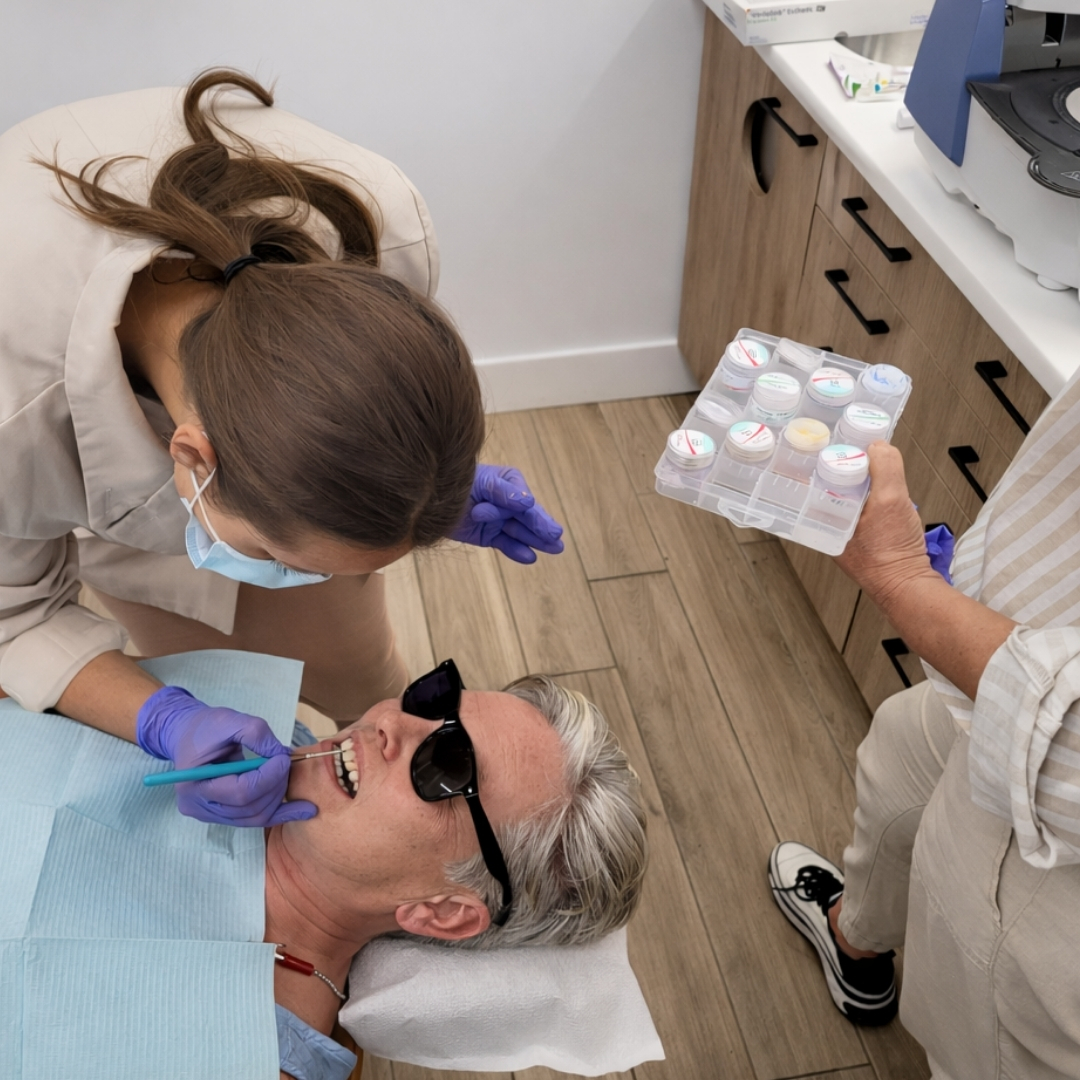
Every clinician knows both versions of the seat appointment. The crown drops in, contacts are light, occlusion checks clean, and the patient leaves. Or the crown seats high, contacts are tight, and the next twenty minutes disappear into grinding and patient reassurance. The frustrating part is that both restorations can look equally good on the tray.
The two-minute case: what it has in common
Fast seats share a pattern. The margin was clearly captured — no ambiguity about where the finish line sits. Adjacent contacts and the opposing arch were complete in the record, so the technician could design interproximal and occlusal anatomy against real geometry rather than estimates. The bite registration was stable and reflected how the patient actually closes. And the prescription stated what mattered: material, shade, contact preference, and any occlusal intent.
When those elements align, the lab builds to a target the clinician already defined. Delivery becomes verification, not reconstruction.
The twenty-minute case: where the time goes
Long adjustments usually fall into predictable categories. A high or rocking restoration often traces to margin interpretation — the finish line was subgingival, obscured by fluid, or truncated on the scan. Tight or open contacts point to incomplete interproximal capture or a distorted model. Occlusal grinding sessions almost always connect to a bite record that was taken in the wrong position, double-captured, or not representative of habitual closure.
Esthetic adjustments are a separate category: the fit may be fine, but shade, value, or characterization missed the patient’s expectation because stump shade or photography was missing. That is not a fit problem, but it still costs chair time.
Same lab, same material different outcomes
This is what confuses teams. The lab, the material, and the turnaround were identical. The difference was case-specific execution. A posterior molar with a clean, supragingival margin and a straightforward bite will almost always seat faster than an anterior unit with a dark stump, tight interproximal space, and a patient who closes eccentrically. Complexity is not an excuse for long adjustments — but it does demand more precision in the record.
A quick diagnostic: where did this case go wrong?
- High or short margin fit: revisit margin capture and retraction at prep
- Tight contacts: check whether interproximal areas were fully scanned or impressed
- High occlusion: evaluate the bite record position, stability, and whether the opposing arch was complete
- Shade miss: confirm stump shade and photos were sent for esthetic cases
- Over-contoured anatomy: check whether clearance matched the chosen material
Identifying the category turns a frustrating seat into useful feedback for the next case.
What teams do differently on consistently fast cases
Offices with short average seat times tend to share habits rather than secrets. They zoom in on digital margins before sign-off. They note contact and occlusal preferences instead of assuming defaults. They flag unusual preps or limited clearance on the prescription. And they call the lab when something looks uncertain — a two-minute phone call before design beats a twenty-minute grind at delivery.
When a long adjustment is still the right move
Not every adjustment means the case was sent wrong. Patients shift, temps distort tissue, and clinical judgment sometimes favors conservative reduction at prep. Minor occlusal refinement and contact polishing are normal parts of delivery. The goal is not zero adjustment — it is knowing which cases should adjust lightly and which ones signal a record problem worth fixing before the next submission.
Note: This article shares general workflow guidance for dental professionals. Clinical judgment, materials, and manufacturer instructions always take precedence.