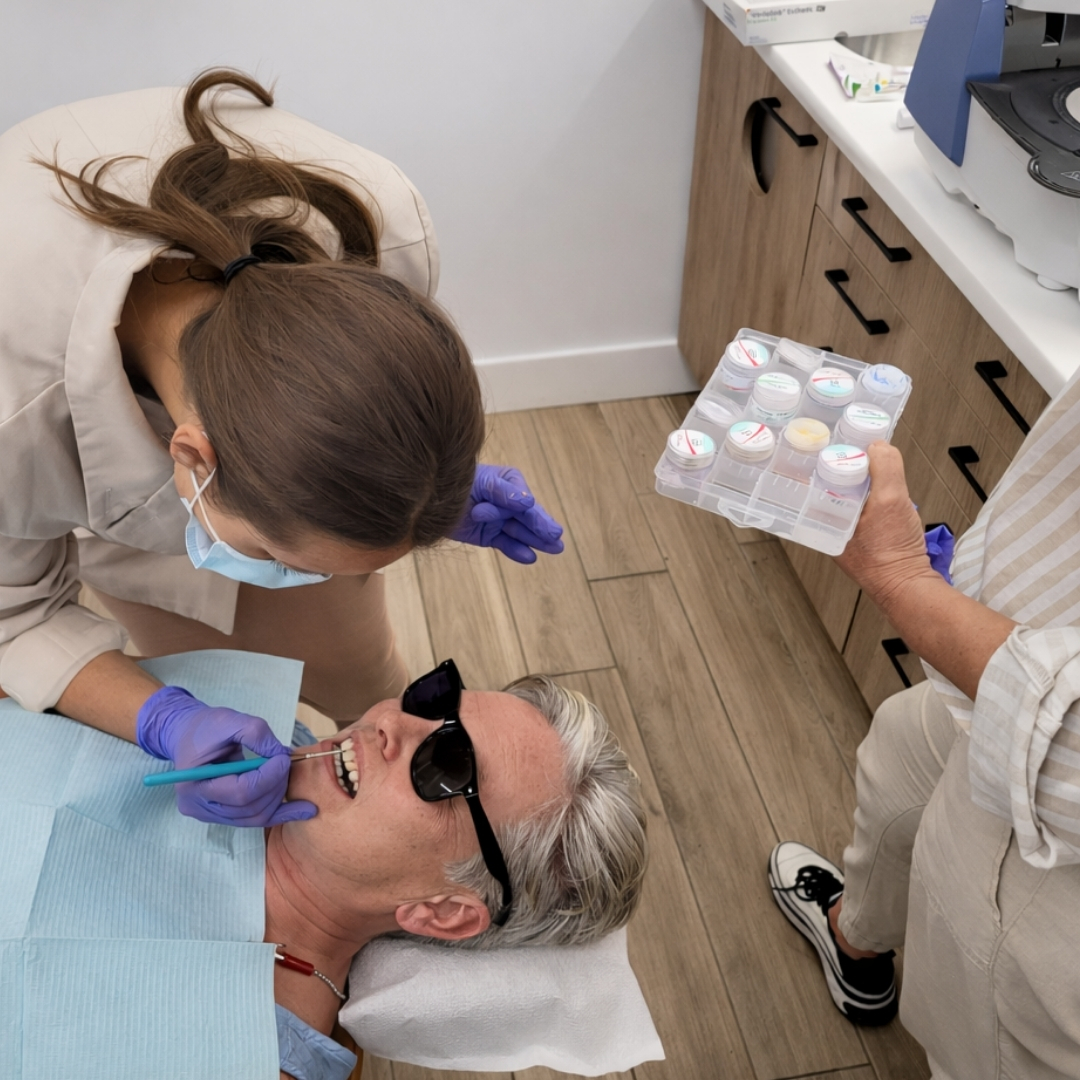
Every unplanned adjustment at delivery costs chair time and, over many cases, patient confidence. The good news is that most adjustments trace back to a handful of factors that can be controlled at submission. Getting them right up front is the most reliable way to shorten seat appointments.
Capture a clean, readable margin
A restoration can only fit as well as the margin it is built on. Blood, saliva, or soft tissue creeping over the finish line forces the lab to interpret where the margin actually is — and interpretation invites adjustment. Adequate retraction, moisture control, and a clearly visible finish line reduce the guesswork that leads to a high or short restoration. On a digital scan, zoom in and confirm the entire margin is captured before you sign off.
Verify contacts and the bite record
Tight or open contacts and a high restoration are among the most common adjustments. Both usually trace back to the records: interproximal areas that were not captured cleanly, or a bite registration that did not reflect the patient’s true occlusion. Confirm that adjacent teeth and the opposing arch are complete, and that the bite record is stable and repeatable. A distorted or double bite quietly guarantees occlusal adjustment later.
State the occlusal intent, don’t assume it
The lab designs to the information it receives. If a case needs light occlusal contact, specific contact tightness, or particular anatomy, saying so on the prescription lets the technician build to that target rather than a default. A short note about how the restoration should relate to the opposing dentition is often the difference between a quick check and a grinding session.
Match the material to the space
Inadequate reduction can force a restoration to be over-contoured or seated high, both of which invite adjustment. Confirming that clearance matches the chosen material — and noting anything limited on the prescription — helps the lab flag a mismatch before production rather than at the chair.
A pre-submission habit that pays off
- Margin fully exposed, dry, and captured — verified by zooming in on the scan
- Adjacent contacts and opposing arch complete
- Bite record stable, single, and repeatable
- Occlusal and contact intent written on the prescription
- Clearance confirmed for the selected material
None of these steps is dramatic on its own, but together they remove the most common reasons a restoration needs work at delivery. When something is uncertain, a quick note or call to the lab before design begins is far cheaper than adjusting later.
Note: This article shares general workflow guidance for dental professionals. Clinical judgment, materials, and manufacturer instructions always take precedence.